
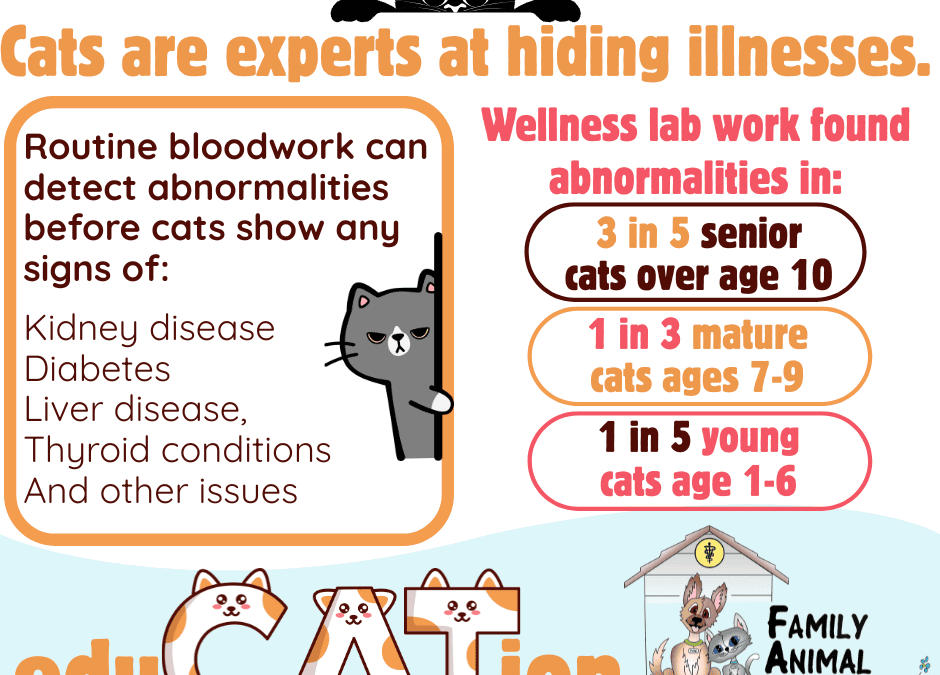
Cats are remarkably good at hiding when something is wrong. While your cat may be eating normally, playing, cuddling, and using the litter box as usual, changes can be happening inside their body long before you notice obvious signs of illness.
That’s why routine wellness bloodwork for cats is such an important part of preventive veterinary care. Blood and urine testing can help identify underlying health problems early, sometimes before a cat ever appears sick.
Why Do Cats Hide Signs of Illness?
Hiding weakness is a natural survival instinct for cats. In the wild, appearing sick or injured could make an animal vulnerable to predators or competitors. Our house cats may live very different lives, but they’ve retained many of those instincts.
As a result, the early signs of illness in cats can be extremely subtle. Sleeping a little more, losing a small amount of weight, being slightly less interested in playing, or drinking a little more water may be easy to overlook.
Sometimes, there are no noticeable changes at all.
By the time symptoms become obvious, a disease may have already been developing for months or even years.
What Can Cat Wellness Bloodwork Detect?
Routine bloodwork gives your veterinarian a look at how your cat’s body is functioning internally. Depending on your cat’s age and individual needs, wellness testing may include a complete blood count (CBC), blood chemistry panel, thyroid testing, and urinalysis.
These tests can help detect changes associated with conditions such as:
- Kidney disease
- Diabetes
- Liver disease
- Hyperthyroidism and other thyroid abnormalities
- Anemia
- Infection and inflammation
- Electrolyte abnormalities
- Changes in blood cells and organ function
Many of these conditions can exist before a cat shows clear symptoms.
Kidney Disease in Cats
Chronic kidney disease is a great example of why early screening matters. It is particularly common in older cats and can progress quietly.
A cat with early kidney disease may still eat normally, maintain normal litter box habits, and behave like themselves. Eventually, owners may notice increased thirst and urination, weight loss, decreased appetite, vomiting, or lethargy, but laboratory changes may be detectable before those symptoms become obvious.
Finding changes earlier gives your veterinarian an opportunity to recommend additional testing, dietary changes, monitoring, or treatment when appropriate.
Diabetes and Thyroid Disease
Bloodwork can also identify elevated blood glucose or other changes that may indicate diabetes. While increased thirst, increased urination, weight loss, and appetite changes can occur with diabetes, these symptoms aren’t always obvious at first.
Hyperthyroidism in cats is another condition that can initially be mistaken for normal aging. Changes in weight, appetite, activity, behavior, heart rate, or coat quality can develop gradually enough that they aren’t immediately noticeable.
Routine testing can help us recognize that something has changed.
Establishing Your Cat’s Healthy Baseline
One of the biggest benefits of performing bloodwork while your cat is healthy is establishing an individual baseline.
Laboratory reference ranges tell us what is considered normal across a population of cats, but every cat is an individual. A result that is technically within the normal range may still represent a meaningful change for your cat.
For example, if we have several years of wellness results showing that a particular kidney value has remained relatively consistent and then see it steadily increasing, that trend may be important, even if the newest result hasn’t crossed outside the laboratory’s reference range yet.
Having previous results allows your veterinary team to compare your cat to the most useful reference point of all: your cat when they were healthy.
Wellness Bloodwork Finds More Than You Might Expect
Even cats that appear perfectly healthy can have important changes hiding beneath the surface. In a large analysis of more than 54,000 feline wellness profiles, IDEXX found clinically relevant abnormalities in 1 in 5 young adult cats ages 1–6, 1 in 3 mature adult cats ages 7–9, and 3 in 5 senior cats ages 10 and older. These findings don’t necessarily mean that every abnormal result represents a serious disease, but they can identify changes that deserve further investigation, monitoring, or follow-up testing. The results also highli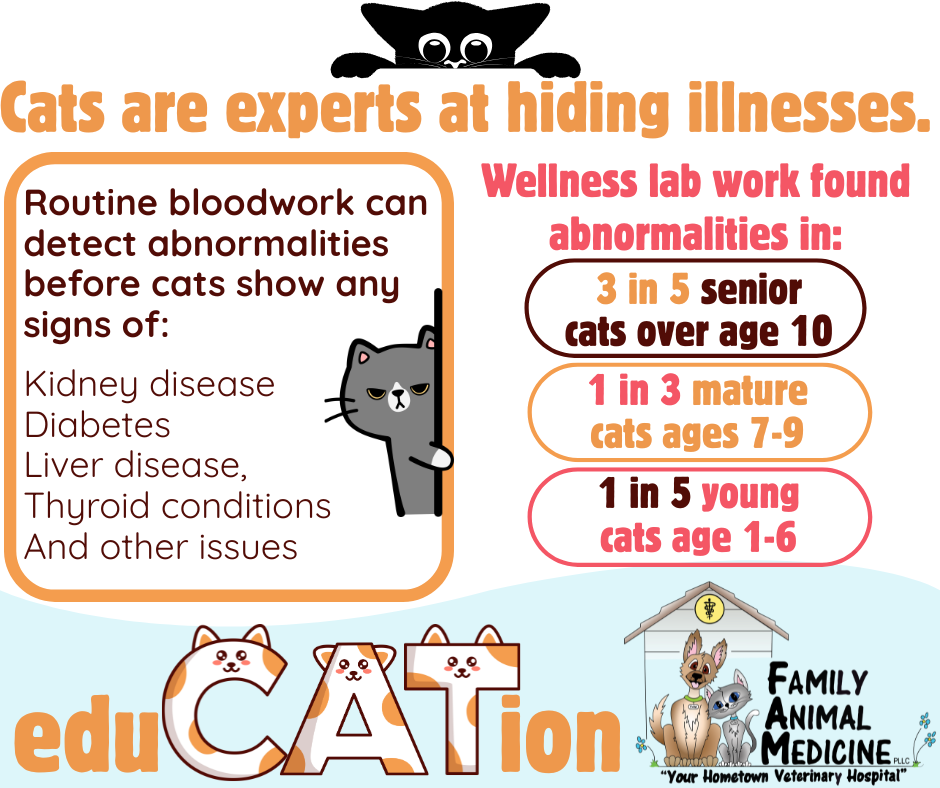 ght something we see often in veterinary medicine: the likelihood of finding an underlying health concern increases as cats age, even when they seem perfectly healthy at home. Routine wellness testing gives us an opportunity to find those changes sooner rather than waiting for your cat to show us that something is wrong.
Is Routine Bloodwork Only for Senior Cats?
Senior cats absolutely benefit from routine laboratory screening because the risk of conditions such as kidney disease, hyperthyroidism, diabetes, and other age-related illnesses increases as cats get older.
But routine bloodwork isn’t only for senior cats.
Testing healthy adult cats can establish those valuable baseline results and occasionally uncover unexpected abnormalities. It can also help your veterinarian monitor changes throughout your cat’s life rather than waiting until they become a senior or develop symptoms.
Your veterinarian can recommend how often bloodwork should be performed based on your cat’s age, health history, medications, lifestyle, and individual risk factors.
“But My Cat Seems Completely Healthy!”
We love hearing that!
Wellness bloodwork isn’t recommended because we expect to find something wrong with every cat. The goal of preventive care is to look for changes before they become obvious problems.
Normal results are valuable, too. They provide reassurance about your cat’s current health and create information that we can use for comparison in the future.
And if we do find an abnormality, it doesn’t automatically mean your cat is seriously ill. A change on bloodwork may simply tell us that we should repeat a test, perform additional diagnostics, monitor something more closely, or make an early adjustment to your cat’s care.
Preventive Care Gives Cats a Voice
Cats can’t tell us that they’re a little more tired than usual, that they’re thirstier, or that something just doesn’t feel right. And because they’re so good at hiding illness, waiting for obvious symptoms isn’t always the best way to protect their health.
Regular veterinary examinations combined with routine cat wellness bloodwork give us a better opportunity to identify changes early, establish healthy baselines, and monitor trends throughout your cat’s life.
Your cat may not be able to tell us when something feels different, but sometimes, their bloodwork can.