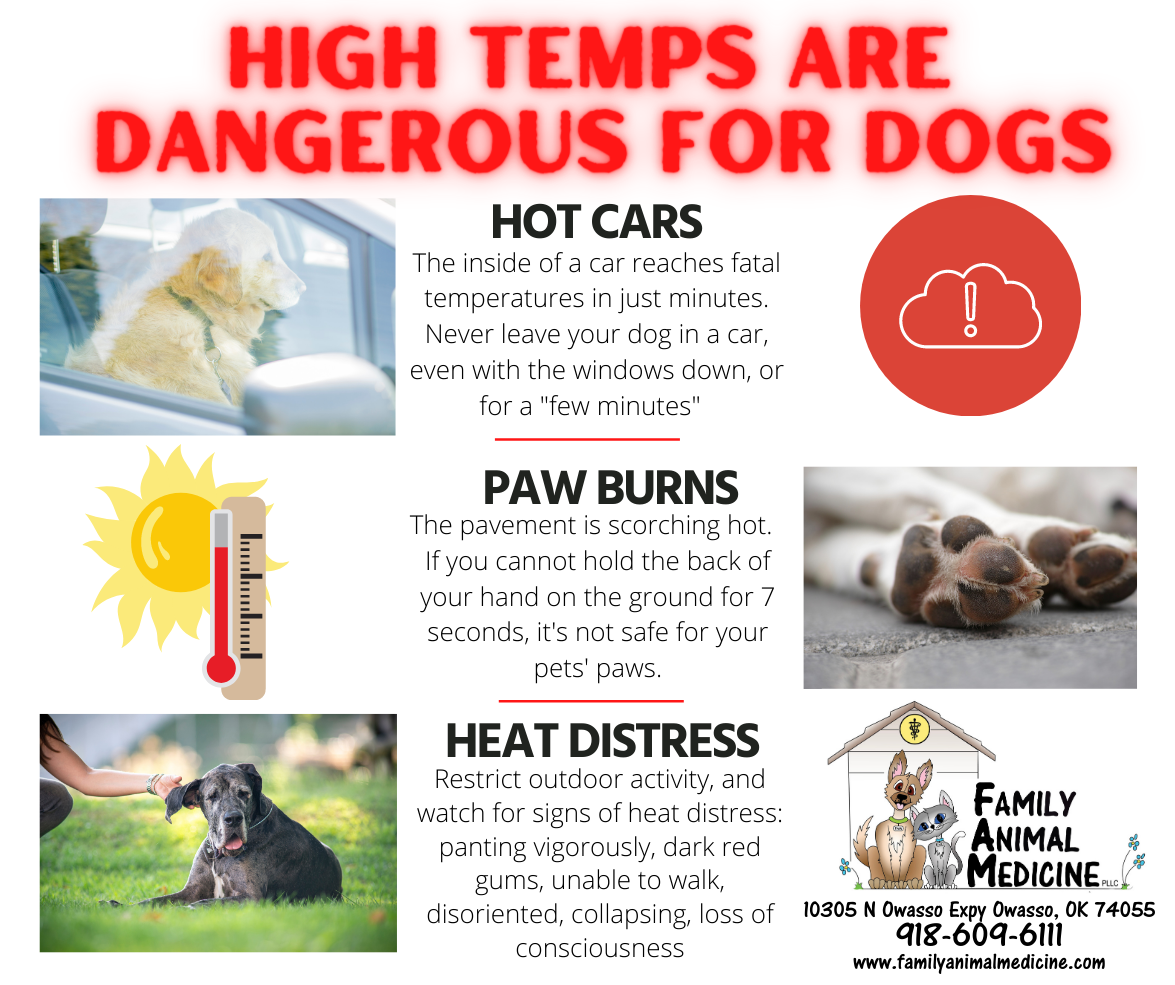
Summer means more time outdoors, longer days, and plenty of opportunities to enjoy the sunshine with our pets. However, hot weather can also create serious health risks for dogs. Understanding dog heat safety is especially important during Oklahoma summers, when high temperatures, humidity, and hot pavement can quickly become dangerous.
Dogs do not regulate their body temperature the same way people do. While humans cool themselves primarily by sweating, dogs rely mostly on panting to release excess body heat. They can also lose a small amount of heat through their paw pads. When temperatures rise, dogs can become overheated much faster than many pet owners realize.
Knowing how to prevent heat-related illness—and recognizing the early signs of overheating—can help keep your dog safe all summer long.
Know the Signs of Overheating in Dogs
Heat exhaustion and heatstroke in dogs can become serious medical emergencies. Recognizing the warning signs early is important.
Signs that your dog may be overheating include:
- Excessive or heavy panting
- Excessive drooling
- Bright red or abnormal-looking gums
- Restlessness or difficulty getting comfortable
- Weakness or extreme tiredness
- Vomiting or diarrhea
- Confusion or disorientation
- Difficulty walking or standing
- Collapse
If you believe your dog is experiencing heatstroke or severe overheating, move them to a cooler area and contact a veterinarian immediately. Heatstroke can cause serious damage to internal organs and can become life-threatening very quickly.
Check the Pavement Before Walking Your Dog
Air temperature is only part of the concern during hot weather. Pavement, concrete, and asphalt can become significantly hotter than the surrounding air and may burn your dog’s paw pads.
Before heading out for a walk, place the back of your hand against the pavement. If the surface is too hot for you to comfortably keep your hand there, it may be too hot for your dog’s paws.
Whenever possible, walk your dog during the cooler parts of the day, such as early morning or later in the evening. Choose grassy or shaded areas when available, and remember that pavement may remain hot even after the outside temperature begins to cool.
Never Leave Your Dog in a Parked Car
Leaving a pet in a parked vehicle is extremely dangerous, even for a short period of time.
The temperature inside a vehicle can rise rapidly, even when the outside temperature does not seem excessively hot. Cracking the windows does not provide enough ventilation to keep the inside of a vehicle at a safe temperature.
The safest choice is simple: never leave your dog unattended in a parked vehicle during warm weather.
Make Sure Fresh Water Is Always Available
Dogs need constant access to clean, fresh water, especially during hot weather.
If your dog spends time outdoors, check water bowls frequently. Water can become warm, dirty, or spilled throughout the day. Outdoor water should be placed in a shaded location whenever possible.
When taking your dog for a walk, hike, trip to the park, or other outdoor activity, bring enough water for both you and your pet. Do not assume that clean drinking water will be available when you arrive.
Provide Plenty of Shade and Opportunities to Cool Down
Dogs should always have access to a cool, shaded area when spending time outdoors.
Keep in mind that shade changes throughout the day as the sun moves. An area that is shaded in the morning may be in direct sunlight a few hours later.
During extreme heat, bringing your dog indoors to an air-conditioned environment is often the safest option. Fans, cooling mats, and other cooling products may help keep pets comfortable, but they are not substitutes for appropriate shelter and temperature control.
Exercise During the Cooler Parts of the Day
Your dog may love walks, running, and playing outside, but strenuous exercise during hot weather can quickly lead to overheating.
Schedule outdoor activities for early morning or evening whenever possible. Shorten walks on particularly hot or humid days, provide frequent water breaks, and pay attention to your dog’s behavior.
Dogs do not always know when they need to stop playing. An excited dog may continue running, chasing a ball, or playing even as their body temperature rises.
You may need to be the one who decides when it is time for a break.
Some Dogs Are at Greater Risk in Hot Weather
Although any dog can develop heat-related illness, some pets are more vulnerable than others.
Dogs at increased risk may include:
- Brachycephalic, or flat-faced, breeds such as Bulldogs, French Bulldogs, Pugs, and Boston Terriers
- Senior dogs
- Puppies
- Overweight or obese dogs
- Dogs with thick or heavy coats
- Dogs with heart or respiratory conditions
- Dogs that are not accustomed to hot weather or strenuous exercise
Pet owners should take extra precautions with dogs that have an increased risk of overheating.
Don’t Forget About Humidity
Temperature is not the only factor that affects dog heat safety. High humidity can make it more difficult for dogs to cool themselves effectively through panting.
This means a warm, humid day may be more dangerous than the temperature alone suggests.
Pay attention to the overall weather conditions, limit strenuous outdoor activity when temperatures and humidity are high, and always watch your dog for signs of overheating.
Be Careful Around Pools and Other Water
Swimming can be a great way for some dogs to cool down, but not every dog is a strong swimmer.
Always supervise pets around pools, lakes, ponds, and other bodies of water. Make sure your dog knows how to safely exit a swimming pool, and consider using a properly fitted canine life jacket during boating or water activities.
After swimming, provide fresh drinking water so your dog is less likely to drink from pools, lakes, or other potentially unsafe water sources.
Summer Safety Starts With Prevention
Hot weather does not mean your dog has to spend the entire summer indoors. With a little planning, you and your pet can safely enjoy walks, playtime, travel, and other summer activities together.
Remember to provide plenty of fresh water and shade, avoid hot pavement, schedule exercise during cooler parts of the day, and never leave your pet unattended in a parked vehicle.
Most importantly, know your dog. Pay attention to changes in their breathing, energy level, and behavior. Recognizing the early signs of overheating and responding quickly can make a significant difference.
If you have questions about keeping your dog safe during hot weather or are concerned about your pet’s individual risk factors, contact Family Animal Medicine. Our team is happy to help you keep your furry FAMily healthy, comfortable, and safe all summer long.